

ICSI Procedure: How It Works and Who Needs It
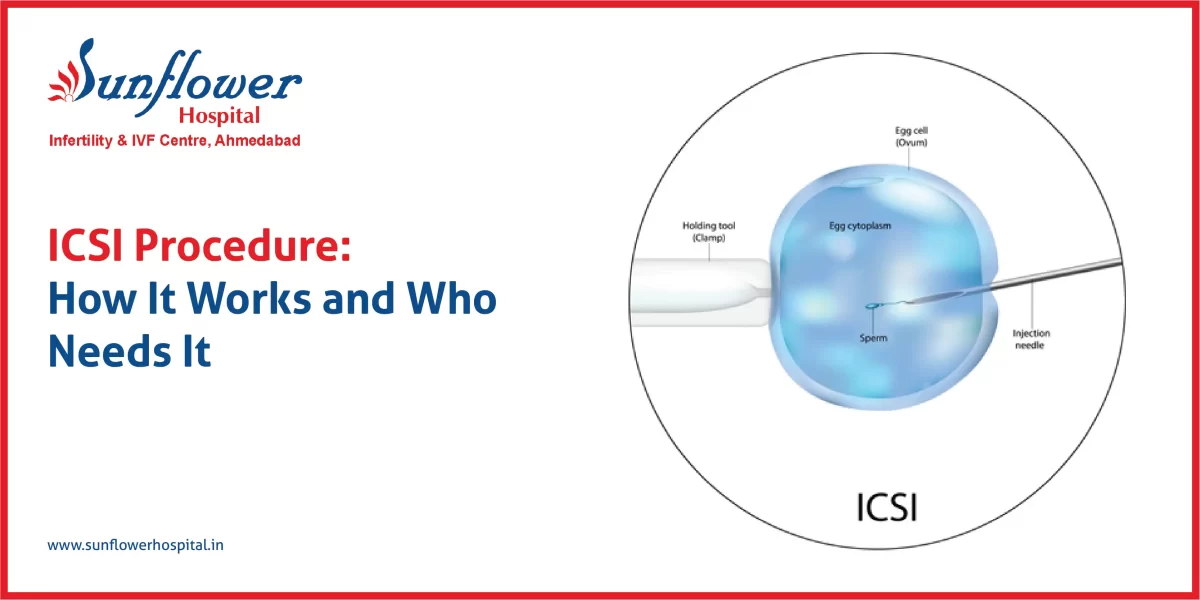

When couples hear about ICSI for the first time, they usually ask the same thing — “Doctor, what is this and do we really need it?” Honestly, I don’t blame them. The name sounds complex. But the idea is simple. It’s a way of helping sperm and egg meet when they can’t do it naturally.
In IVF, eggs and sperm are placed together in a dish, and we wait for fertilization. With ICSI, it’s different. Under a microscope, we pick one good sperm and inject it straight into the egg. That’s it. That’s the ICSI procedure in infertility. More controlled, more precise. And often, the only way forward for couples dealing with male infertility.
Who really needs it? Usually men with very low sperm count, poor motility, or abnormal shape. Sometimes, sperm is retrieved surgically — just a few cells — and even that’s enough for ICSI. I remember one man who came to us completely broken after hearing his semen report. He thought fatherhood was impossible. With ICSI, his wife conceived, and the day they brought their baby to the clinic, the smile on his face said everything.
Another case was a couple who had tried IVF twice and failed. They were ready to give up. We suggested switching to ICSI. Same steps as IVF — stimulation, retrieval, transfer — but fertilization was handled differently. That small change gave them healthy embryos, and on their third attempt, they succeeded. For them, it wasn’t just treatment. It was the last hope.
People often ask about the difference between IVF and ICSI. The truth is, the journey looks the same on the outside. Hormone injections, egg pick-up, embryo transfer — all identical. The only difference lies in the lab. IVF lets sperm and egg meet naturally in a dish. ICSI is guided — one sperm, one egg, one chance. That’s what makes it powerful when nature needs a little help.
At Sunflower IVF, we’ve seen ICSI turn hopeless cases into success stories. It’s not magic. It doesn’t guarantee pregnancy. Age still matters, egg quality matters, sperm health matters. But it gives couples with severe male factor infertility or repeated IVF failures another real shot at parenthood. And sometimes, that second chance is everything.
related blog

When to Visit a Male Fertility Specialist
Micro TESE Procedure Explained