

Assisted Hatching: Advanced IVF Technique Explained
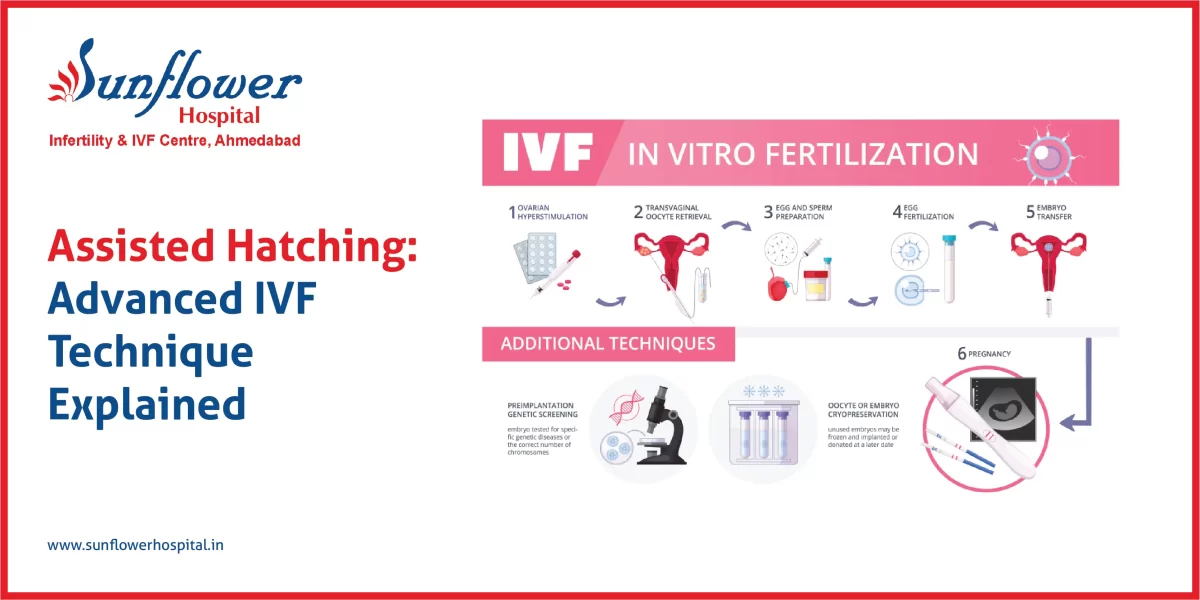

Couples often ask me, “Doctor, why didn’t my embryo implant even though it looked healthy?” Honestly, sometimes the reason is small — so small you cannot see it without a lab. One of the ways we try to help is with assisted hatching.
What is assisted hatching?
Think of the embryo like a seed inside a shell. That shell is called the zona pellucida. For pregnancy, the embryo has to break out of it. Sometimes the shell is too thick, too hard. With assisted hatching in IVF, we make a tiny opening in that shell in the lab. It helps the embryo come out and attach to the uterus.
Who usually needs it?
Not everyone. Mostly women above 37, couples who failed IVF a few times, or embryos that look like they have a thick outer layer. It’s also useful for embryos that were frozen and thawed — freezing can harden the shell.
I remember a patient, 39 years old. She had two failed cycles before. She told me, “Doctor, I don’t think I can try again.” On her third cycle, we added assisted hatching. That cycle worked. She later came back with her baby just to thank the lab team. Stories like this remind us why we use it. At an affordable IVF center in India, we only suggest it when it can really help.
How do we do it?
It’s done in the lab. A laser or chemical method is used to make a very small hole. The embryo is safe. The transfer for the patient feels no different at all. What changes is that the embryo gets a better chance to implant.
Why it matters
For the right patients, it improves implantation chances. Not a guarantee, but it tips the odds. That is why it has become part of advanced IVF techniques and why it contributes to the overall success rate of infertility treatments in India.
Final thought
Not every case needs assisted hatching. But for couples who have struggled before, it can be the extra step that makes the difference. At Sunflower IVF, we decide carefully. And when we recommend it, it is only because we believe it may turn failure into success.
related blog

When to Visit a Male Fertility Specialist
Micro TESE Procedure Explained