

Fresh vs. Frozen Embryo Transfer: Pros, Cons & Outcomes
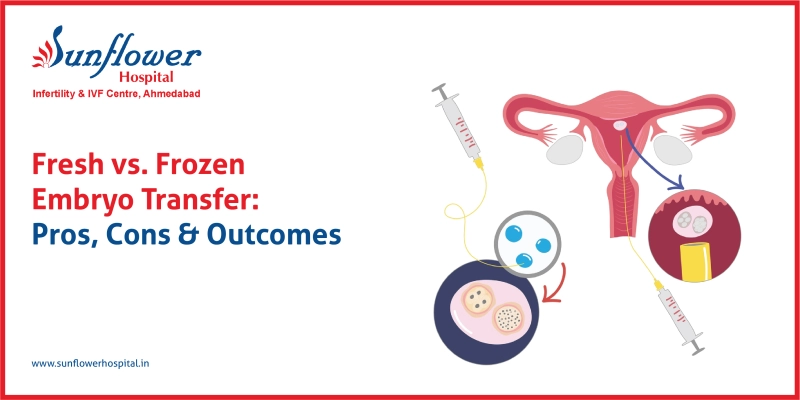

For couples starting IVF, one of the first big choices is whether to go for a fresh embryo transfer or a frozen embryo transfer in IVF.
Both are used widely in fertility care, but they don’t work quite the same way. The timing is different, the benefits aren’t identical, and even the results can vary. At Sunflower Hospital, we walk couples through each option — no rushed explanations — so they can choose what feels right for them and their health.
What Is Fresh Embryo Transfer?
A fresh transfer means the embryos are placed in the uterus just a few days after egg retrieval and fertilisation. Everything happens in the same treatment cycle — no freezing, no storing. This can be a good choice when hormone levels look stable and the uterine lining is already ready for implantation. We’ve had couples who liked the idea because it felt like moving ahead without waiting another month or two.
What Is Frozen Embryo Transfer in IVF?
With a frozen embryo transfer in IVF, embryos are frozen soon after fertilisation and kept safe until a later cycle. This gives the woman’s body a break from the medications used for stimulation. Many people also ask about the benefits of blastocyst transfer in IVF, and this often goes hand-in-hand with frozen transfers because embryos can be grown for a few extra days before freezing, letting us pick the strongest ones.
Pros and Cons of Each Method
Fresh transfers are quicker — you’re moving straight from egg retrieval to transfer in the same cycle. For couples eager to see results, that speed can be comforting. But there’s a catch: the ovarian stimulation medicines can sometimes make the uterus less receptive. Frozen transfers give us time to prepare the body better, balance hormone levels, and set up the uterine environment for implantation. For women with high hormone levels, PCOS, or other medical conditions, that extra time can make a difference.
Outcomes and Success Rates
We’ve seen many cases where a frozen embryo transfer in IVF resulted in higher pregnancy rates, especially in women whose hormone levels were unstable during the stimulation phase. But that doesn’t mean fresh transfers don’t work — when the timing and uterine conditions are right, they can be equally successful. The choice comes down to looking closely at your health, your embryos, and how your body responded to treatment.
Final Word
There’s no universal “best” option — both fresh and frozen transfers can lead to a healthy pregnancy if done at the right time and under the right care. At Sunflower Hospital, we match the method to the couple, not the other way around, so every step — from growing the embryos to placing them in the uterus — is aimed at giving you the highest chance of success.
related blog

When to Visit a Male Fertility Specialist
Micro TESE Procedure Explained